Showing posts with label retail. Show all posts

June 23, 2013

RFID in Indian Retail Sector

It was in the year 2005 that Wal-Mart made it mandatory for its suppliers to use RFID. In 2008, the Future Group incorporated this technology in their operations through a tie-up with Cisco Systems. Given that the technology isn’t new, and has huge potential to tackle many issues in modern retail sector, its penetration has been rather slow. RFID tags were first used commercially in 1960s by Sensormatic, Knogo and Checkpoint which developed systems to counter the theft of merchandise. At that time, they could only detect the presence or absence of tags; however the tags could be made inexpensively and hence were quite effective in reducing pilferage. These systems were known as Electronic Article Surveillance (EAS).Over half a century later, widespread application of this technology is still in its nascent stage.

ISSUES
 
The various hurdles on the way of wide acceptance of RFID systems can be categorized as either technical or managerial. The major technical issues are:
 
1. Collision: RFID tag readers face problems when they 'collide' with each other. The signals from one reader may interfere with those from another, especially when their physical coverage overlaps. 
 2. Lack of allotted frequency band: RFID works on radio waves, which are regulated by the governments all over the world. There exists no international agreement on the frequency band to be allotted for RFID. Given that this technology can heavily change the face of supply chains globally, this is a huge hindrance in the way of its global adoption.
3. Signal detection and interference: The RFID tags also have a tendency to interfere with each other's signals, thus making it difficult for the tag readers to detect them. Adding to the difficulty, the signals are partially blocked by certain types of packaging materials, metals and liquids.
 
 On the other hand, the following are the managerial issues:
 
1. Lack of Technology Standards: Many organizations prefer to have their own proprietary RFID systems because of the fear that their RFID tags could be read by their competitor, leading to a serious leak of sensitive information. Thus it has been very difficult to reach a consensus on a universal technology standard for RFID.
2. Lack of Acceptance by Supply Chain Partners: Even a giant like Wal-Mart had faced some difficulties in implementing RFID in its supply chain due to resistance from some of its supply chain partners. RFID might not make sense to everybody, especially given the high initial costs of implementation.
3. Returns on Investment: Implementation of RFID usually costs a lot and the break-even period and returns on investment might not be acceptable for every retail business.
4. Customer Privacy: Some of the applications of RFID come with a baggage – customer privacy issues. Hence a lot of contemplation has to be done on these aspects.
5. Data Management Problems: RFID systems generate a lot of data in real time. Managing this data would require major changes in the data structures of master files to maintain consistency across the firm and its value chain participants.
6. Expensive for Low-Value Merchandise: The cost of RFID tags varies from Rs.5/- to Rs.100/-, largely depending on the type – passive (not self-powered, derives power from the signals of the tag reader), Active (completely self-powered) and Semi-passive. Even the cheapest RFID tags would not justify their item-level application on low-value merchandise like small toys, chocolates etc. Currently, the tags are used on pellet-level, box-level or container-level in such cases, thus limiting its capabilities.

APPLICATIONS

Now let’s have a look at some well-known applications of RFID in retail sector:

Source: www.thehindu.com
1. Out-of-stock Warning: Stock out is a bigger evil than excess inventory in retail. RFID tag readers can detect the number of units of each SKU on the shelf in a retail store in real time. This enables the implementation of an out-of-stock early warning system. This system can also be integrated into a vendor-managed inventory platform. The same concept would work in warehouses, thus benefitting the whole retail supply chain.

2. Shoplifting: Shrinkage, i.e. unaccounted losses in retail, is perhaps the most daunting reality for  retail businesses, and its major cause is shoplifting. It should also be noted that the RFID usage mostly seen around us relates to security of the merchandise, which shows that the benefits of RFID in this aspect already exceed the investments.

3. Supply Chain Visibility: The ability to detect each unit or pellet of each SKU in retail setup as well as warehouses and even during transportation (RFID readers can be placed in the vehicles and connected to the GPS) can be translated into very high visibility across the supply chain. This helps in combating the dreaded bullwhip effect, making better forecasts and avoiding shrinkage and other losses in the supply chain.

4. Rapid Inventory Counting: Inventory counting is an essential exercise in any retail business to avoid or at least detect shrinkage. It is executed very frequently in high-value retail businesses, e.g. once every 24 hours in some jewellery retail outlets. But even in FMCG retail, it is done once every few months. Needless to say, inventory counting is heavy on both manpower and time. RFID can make this process very quick and easy. 5. Rapid Check-out: Though shopping in an organized retail setup has become a means of social interaction and recreation for many consumers, it also has some trade-offs, and the worst, undoubtedly, is waiting in a queue for checking out. The currently popular UPC (Universal Product Code) barcode system makes a particular alignment of the barcode with the barcode reader necessary for proper detection and reading. This, and the fact that each item in the shopping cart must be read individually, constitute a major part of the waiting time of the customers. RFID system would allow almost immediate check-out and virtually zero waiting time by reading all the items in the shopping cart instantaneously and in one go.
 
There are also some potential applications of RFID that are not so obvious, like:

1. Identifying Consumer Behaviour Patterns: This is already being done with the help of membership cards by recording and analysing the buying patterns of the respective customers (card-holders). To go further, RFID tags can be embedded in the smart shopping cards, and then the presence or absence of the respective customer in the store can be detected. In fact, it is possible to track even the movement of the customer within the store. This data can throw up new, a fruitful insight in consumer behaviour. It is also technologically possible to identify how customers observe and react to different items on offer in the retail store. For example, for a particular SKU’s trial pack, the number of times it is picked up and placed back on the shelf can be determined. 2. More Efficient After-Sales Services: The ability to uniquely identify a particular product can be used to create a history of its service which is easily accessible. This would be something similar to sharing of a person’s medical history across different hospitals for better diagnosis. Though we have a long way to go before the huge potential of RFID is identified and utilized by the retail industry, the hopes have gone up owing to the recent developments in “FDI in Retail” and the efforts of organizations like EPC global Inc. Acknowledgement.

References:

1.Sumeet Gupta, Sanjib Pal; An Analysis of Issues and Possible Remedies in the Adoption of RFID in Retail Chains of India, in Cases on Supply Chain and Distribution Management, IGI Global, Eds. MitiGarg & Sumeet Gupta, Pgs. 387-400.
2.http://articles.economictimes.indiatimes.com/2008-03-25/news/28387628_1_retail-biggies-future-group-future-in-hypermarket-format.
3.read.pudn.com/downloads165/doc/comm/755010/RFID.doc
 
This article has been written by Sumeet Gupta. He is a professor in the area of Information and Technology Systems at IIM Raipur. His areas of research includes Management Information Systems (Technology Adoption), Virtual Communities, Supply Chain Management.
This article was published in Strive (Volume 2, Issue 2)

March 01, 2013

XPLORYZE 2.0- Case Study Competition

XPLORYZE is the flagship event of OPEP club conducted as part of IIM Raipur’s Annual Business  & Cultural Fest 'EQUINOX'. It is a case analysis competition in which teams from premium B-schools of the country compete against each other. The event was organised by Anubhav Sood and Abhijeet Srivastav, members of OPEP club. The case involved entry of a new retail store chain in Raipur. Students were to analyse the case based upon the data & situations given in case and come out with choice of location, format, layout & merchandising strategy.  In the first round, students from all B-schools across the country were invited to send their case analysis. On the basis of the analysis top 5 teams were to be selected for presenting their solution in front of judges and audience at IIM Raipur camps.  This time we had a total of 37 entries in the first round out of which top 5 teams were selected to present their analysis in the on-campus finale.

May 07, 2012

Less is More: Not Just a Retail Phenomenon

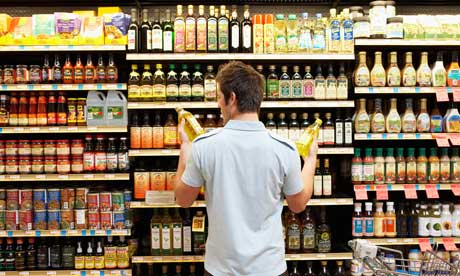
One of the major advantages of organized retail, apart from low prices, is the vast array of choices it provides to the consumers. In the last few years, the rapid increase in the number of super-markets and mega-markets in the country has been accompanied by an explosion in the varieties of every imaginable merchandise that populates their shelves.


But like many other transformations that retail sector has been undergoing, a rather unexpected one has been gaining grounds, and it is not so recent. Retail giants like Walmart are already cutting down the huge number of choices offered in their stores, favouring only selected varieties which are generally preferred by the customers. But how does this make any sense? As it turns out, organized retail players all over the world are facing heat due to at least one of the following factors:
1.    Rising real estate prices,
2.    Expenses of managing a large number of SKUs, their supply chains and inventories,
3. Loss of opportunity of tapping consumers in urban centers where space is a scarcity and huge shopping centers cannot be established and
4. Loss of opportunity to tap communities of consumers in rural areas, which are too small to sustain a super or mega market.
These are also the significantly responsible reasons for the losses being incurred by almost all the organized retail players in India. Stocking a large number of products and their varieties calls for huge real estate investments, and that has been made very difficult by the sky-rocketing real estate prices. Towns and villages are usually dominated by unorganized retailers as they have been so far neglected by the organized players.

Another important aspect is related to the consumers. It has been found that though providing some variety boosts customer satisfaction, going too far might lead to “customer confusion”. Too many choices overwhelm the customers and lower their buying intent. The solution lies in bringing to them a few, “well-researched” types of products instead of too many varieties. This is the simple concept of “Less is More”. So, in a nutshell, this enables the organized retailers to achieve the following:
1.       Better customer satisfaction,
2.      Lesser number of SKUs to manage and hence simpler inventory,
3.      Ability to establish small-sized stores with low real estate investments and
4.      Ability to establish small-sized stores in urban centers as well as in rural areas.
It follows that Walmart’s decision of opening dozens of scaled-down stores in the near future is not surprising at all. It is interesting that some Indian retail giants have already been following this model. One close example could be the Mumbai based D-Mart. Future Group also runs a chain of small stores called KB's Fair Price, apart from the giant Big Bazaar stores.

“Less is More” has far wider implications than what appears from this article so far. For example, in a recent interview with The Economic Times, the MD and CEO of Bajaj Auto Mr. Rajiv Bajaj stressed upon the relevance of this idea to the competitive motorcycle market. Apparently, this has allowed Bajaj to gain a strong position in the market in the last few years. Though the top position is still held by Hero Motocorp, Bajaj Auto has stunned everyone by becoming the most profitable motorcycle manufacturer. The company claimed 58% of the total profits generated by the industry in 2010-11.
As the companies go “on diet” to become more efficient and move faster than the competition, the focus will now shift on selecting the “right diet” or the best choices to be provided to the customers.

March 25, 2012

IIM Raipur Launches Special Issue of Strive on Retail

On 11th March 2012, the Operations and Supply Chain Club of IIM Raipur, OPEP, launched the second issue of its magazine Strive. This issue of Strive focuses on the Retail Sector, an area which has been in the headlines for quite some time and needs immediate attention. The Magazine was launched by Prof. B S Sahay, the Director of IIM Raipur, along with Mr. Satyan Mishra, Co-Founder & MD, Drishtee Foundation and Mr. Bahadur Ali, MD, IB Group. Prof. Sahay lauded the efforts of the club in bringing together the various aspects of and challenges in the retail sector in a special issue of the magazine.

From Left : Akshay Aggarwal, Rohit Bhagat (Editor, Strive) , Mr. Bahadur Ali (MD, IBGroup), Mr. Satyan Mishra (MD, Drishtee Foundation) , Prof. B.S. Sahay (Director, IIM Raipur) , Anshu Katiyar and Nitin Kuraien at the Launch.

Just as the inaugural issue, this issue of Strive has also been launched in a Tablet Friendly version which helps it to be viewed easily on smartphones and tablets. The magazine was launched on the second day of Enspirit 2012, the inaugural edition of the Entrepreneurship Summit of IIM Raipur. Other eminent personalities who graced the occasion were Mr. Abhishek Sinha, CEO, EKO India Financial Services, Mr. Nirmal Kumar, Founder, Nirmal Group, Mr. Snehanand Sinha, Advisor to Social Businesses, Mr. Phanindra Sama, CEO, Redbus, Mr. Rustam Sengupta, CEO, BOOND and Mrs. Rashmi Bansal, the well-known Author & Entrepreneur.
Speaking on this occasion the Editor of Magazine and a Second year student, Rohit Bhagat, highlighted the salient features of the magazine. The second issue of Strive contains articles from both academia and the industry with Companies like Jubilant Foodworks (formerly Domino’s
Pizza India Ltd.) and Technopak contributing articles for the magazine. The magazine features an exclusive interview of Mr Arvind Singhal, CMD, Technopak. Other noted contributors include Mr Ajay Kaul, CEO, Jubilant Foodworks, Prof. Bhalender Singh, Prof. Omkar Prasad Vaidya and Prof. Naval Bajpai.

Students have written articles on the role played by Farmers and Middle-Men in the Supply Chain, emergence of E-Tailing in India, Retail in China, Book Review of “It Happened in India” and Success stories of Amul and Walmart. The local challenge discussed in this issue is the upcoming Logistics Hub in Raipur. In addition to the earlier column on Summer Internship Experience, two more columns have been added. Through the column of Gurumantra, some relevant technical terms would be explained. In this issue, the RFID technology has been explained in details. The other column is a debate, where students have presented contrasting views on “Should India allow FDI in Retail?”

Rohit thanked his team for the successful release of the special issue of Strive. The magazine will now be available for students of all B-schools across India and abroad and also for Retail Professionals in the industry. To access the magazine, please click here.

December 11, 2011

HUL 'PopEye'


Some think that the retail industry has matured and there are no new opportunities, but Hindustan Unilever Limited (HUL) doesn’t think this way. It thinks out of the box. It thinks there are tremendous opportunities in the market. Just imagine a 55% market share in skin care for HUL. If it can retain this and work to develop and expand the market it would fetch HUL a phenomenal growth. For this, INNOVATION alone isn’t enough. There should also be RENOVATION which makes the brand look fresh all the time. Innovation doesn’t just mean launching new products; it shows the company is on a step higher than it was previously. Along with these two, HUL believes in a third aspect, ACTIVATION. The important part of it is how to take innovation and make it alive in the market where the science of marketing is at play.

Study on HUL shows some interesting facts - it has built the detergent market in India with RIN bar, it was the one which brought in the concept of washing powder with SURF. All these examples clearly prove a point - HUL’s main focus is on Brand Building. Taking forward this mission of Brand Building, HUL has launched a new technique named POPeye where in the employees of different departments can flag the products which are in shortage or out of stock in any store across any country. By this they are assuring themselves of not losing consumers to their rival brands.
Under this program the employees enter their feedback which directly lands in a portal or a call centre that has been set up for this purpose. This feedback is validated on a real time basis before alerting the sales department. The company believes that there are more than enough sales employees across the length and breadth of the country who can support the sales in the country.

Six months ago, HUL launched this program in Bengaluru and could get 230 calls from 100 different outlets. The sales department had been alerted and they converted them into action plans for the salesmen. Last month the company extended this program to Chennai and Baddi plant in Himachal Pradesh. Looking forward, the company is expecting a huge increase in the sales opportunities.

Implementing this further would bring great benefit to the company as the loopholes in the distribution system would be eliminated. At present, HUL has an on-shelf availability of 95%. POPeye would spruce up the distribution network, the company believes. Employee involvement has made it possible for HUL to directly reach two million outlets in just two years. POPeye is a broader thought of HUL’s “Mission Bushfire” which was implemented to increase the availability of its products in 16,000 kirana stores. Despite this improvement in ordering system, the store owners are proactive enough to re-order products before a condition of out of stock is reached. The customer satisfaction is expected to improve as the number of out-of-stock complaints against HUL would be drastically reduced.

The benefit of POPeye is that the feedback given by the employees is collected and it is immediately made accessible to the decision makers who analyze it. This provides a clear picture of flow of material through the entire supply chain. It is more like data mining where there is a single point access to the data which could be used by all the departments of the company avoiding confusion between the various departments like Operations, Marketing, Finance and HR. The ease of using the data and efficiency of data access has been improved.

During 2010-11, HUL added over 600,000 outlets and tripled its direct coverage in rural India, which contributed to 50% of its rural growth. POPeye can make the products reach the consumer in a better way. It helps in avoiding the missing out of consumers due to lack of availability or the visibility in a store.


Reference: Economic Times article "HUL launches 'POPeye' to enable staffs flag products shortage in any store" dated 9th November, 2011.

The writer of this article, T V Dheeraj Vishnu is a PGP student of Indian Institute of Management, Raipur. He has done his B.Tech in Electrical and Electronics Engineering from Nalla Malla Reddy Engineering College, Hyderabad and can be reached at pgp11039.dheeraj@iimraipur.ac.in or at +91-7587208639.