Showing posts with label retail chain. Show all posts

September 14, 2012

Effect of Retail Channel Integration through use of IT


Most of the retailers now offer consumers with different channels to buy products. Consumers can buy products through traditional stores, online, mobile, call centres, kiosks etc. However these multiple channels have less integration with each other .For example, consumers dealing with the same organisation will find different pricing, inventories and policies depending on the channel being used. Moreover, the customer service personnel in the physical store may not be knowledgeable about the “in -store payment for online orders”, “in-store returns of online orders”, “online gift cards” etc for products brought through online. Since there is less integration with different channels, a consumer cannot pick the product from physical store which he/she has ordered through ecommerce site. These are the main issues faced by a consumer today due to lack of transparency between different channels within an organization. So it is the need of the retailers to provide consumer with cross-channel convenience.

IT is becoming one of the critical resources in multi channel service operations management as it provide share ability and reusability of information which is  necessary for business process integration. So it is important for the multi channel retailers to use IT effectively in integrating their activities. With retail chain integration, companies can provide advertising and publicity of one channel through another channel. This will encourage customers of one channel to use the others, and increase awareness of the different channels .For example, the physical store can be used as an advertising medium for the Website through brochures, receipts, carrying bags and posters. Likewise, the Website can provide contact information about the physical stores and announce in-store promotions.


 Some of the other major effects of retail channel integration through IT are as follows.

1. Offering customers to choose their preferred channel to buy and complete their purchases. In South Korea, Tesco’s Home Plus has found a way to help time-pressed commuters to shop on the go using their smart phones by building virtual stores on the platform of subway stations. Home Plus displayed images of food items  across the walls of train platforms and every item has a corresponding QR barcode associated with it. People waiting on the platform can scan the QR code of the required item using their mobile and adds products directly to their shopping cart. When the online purchase is done, it would be delivered to user’s home within hours.   

2. Ensuring the consistency of product and pricing information across different retail channels. This can be achieved by integrating product catalogues and ensuring that product descriptions, product categories, prices, and discounts are consistent in the various channels. It ensures the transparent flow of information between processes and reduces confusion arising from information inconsistencies

3. Providing customers to access information available in one channel from another channel. For example, the Website can allow customers to search for products available in the physical store through an integrated database. Likewise, information kiosks at the physical store can help customers search for product information, availability, and the store location of products from the Website. Information on real-time inventory can be made available online so that customers will not make wasted trips to the store when the product is not in stock.

4. Collecting customers online and offline transaction information and making it available across multiple channels. This increases the richness of the information available and the quality of services that can be provided. It allows the retailer to provide many value-added services such as personalized Web pages to users.

5. Providing services for customers to access service support in the channel of their choice. Support can be offered at physical stores for problems related to online purchases, such as allowing customers to return goods ordered online at a physical store and vice versa.


Bibliography

Lih-Bin Oha,Hock-Hai Teob, Vallabh Sambamurthy. The effects of retail channel integration through the use of information technologies on firm performance.


The article has been contributed by Thousif Mohammed, who is presently a first year PGP student at IIM Raipur. He has worked with TCS for 2 years. His areas of interest include Supply chain management & customer service.

May 07, 2012

Less is More: Not Just a Retail Phenomenon

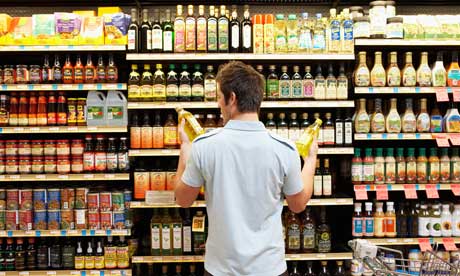
One of the major advantages of organized retail, apart from low prices, is the vast array of choices it provides to the consumers. In the last few years, the rapid increase in the number of super-markets and mega-markets in the country has been accompanied by an explosion in the varieties of every imaginable merchandise that populates their shelves.


But like many other transformations that retail sector has been undergoing, a rather unexpected one has been gaining grounds, and it is not so recent. Retail giants like Walmart are already cutting down the huge number of choices offered in their stores, favouring only selected varieties which are generally preferred by the customers. But how does this make any sense? As it turns out, organized retail players all over the world are facing heat due to at least one of the following factors:
1.    Rising real estate prices,
2.    Expenses of managing a large number of SKUs, their supply chains and inventories,
3. Loss of opportunity of tapping consumers in urban centers where space is a scarcity and huge shopping centers cannot be established and
4. Loss of opportunity to tap communities of consumers in rural areas, which are too small to sustain a super or mega market.
These are also the significantly responsible reasons for the losses being incurred by almost all the organized retail players in India. Stocking a large number of products and their varieties calls for huge real estate investments, and that has been made very difficult by the sky-rocketing real estate prices. Towns and villages are usually dominated by unorganized retailers as they have been so far neglected by the organized players.

Another important aspect is related to the consumers. It has been found that though providing some variety boosts customer satisfaction, going too far might lead to “customer confusion”. Too many choices overwhelm the customers and lower their buying intent. The solution lies in bringing to them a few, “well-researched” types of products instead of too many varieties. This is the simple concept of “Less is More”. So, in a nutshell, this enables the organized retailers to achieve the following:
1.       Better customer satisfaction,
2.      Lesser number of SKUs to manage and hence simpler inventory,
3.      Ability to establish small-sized stores with low real estate investments and
4.      Ability to establish small-sized stores in urban centers as well as in rural areas.
It follows that Walmart’s decision of opening dozens of scaled-down stores in the near future is not surprising at all. It is interesting that some Indian retail giants have already been following this model. One close example could be the Mumbai based D-Mart. Future Group also runs a chain of small stores called KB's Fair Price, apart from the giant Big Bazaar stores.

“Less is More” has far wider implications than what appears from this article so far. For example, in a recent interview with The Economic Times, the MD and CEO of Bajaj Auto Mr. Rajiv Bajaj stressed upon the relevance of this idea to the competitive motorcycle market. Apparently, this has allowed Bajaj to gain a strong position in the market in the last few years. Though the top position is still held by Hero Motocorp, Bajaj Auto has stunned everyone by becoming the most profitable motorcycle manufacturer. The company claimed 58% of the total profits generated by the industry in 2010-11.
As the companies go “on diet” to become more efficient and move faster than the competition, the focus will now shift on selecting the “right diet” or the best choices to be provided to the customers.

July 18, 2011

Starbucks in India: Creating Sourcing, Quality and Pricing Synergies


Starbucks is finally coming to India. The world's largest premium coffee retail chain announced in January that it has entered into an agreement with Tata Coffee for a strategic alliance.
Headquartered in Seattle, Washington, Starbucks operates in more than 50 countries. It has been sourcing coffee beans from India for the last seven years.
Tata Coffee is Asia’s largest coffee plantation company and the third-largest exporter of instant coffee in the country. It produces more than 10,000 million tonne of shade grown Arabica and Robusta coffees at its 19 estates in south India. Its two instant coffee manufacturing facilities have a combined installed capacity of 6,000 tonne.
Under a non-binding memorandum of understanding (MoU), Starbucks will explore setting up stores in the Tata group's retail outlets and hotels, besides sourcing and roasting coffee beans at Tata Coffee's Kodagu facility.
Tata Coffee, one of the biggest suppliers of Arabica coffee beans, has shipped coffee beans to Starbucks in the past and is now building a structure for a long-term relationship, a joint release from the Tata group and Starbucks.
Retail growth outside the US is now central to the company's strategy. In an investor presentation, Starbucks International President John Culver said the company hopes to operate at least 1,500 stores in mainland China by 2015. He also said that the company sees exciting growth prospects in other emerging countries such as India and Brazil.
According to the MoU, the two companies will collaborate on providing training to local farmers, technicians and agronomists to improve coffee-growing and milling skills. The two companies will also explore social projects in the coffee-growing regions Tata Coffee operates.
“This MoU is the first step in our entry to India. We are focused on exploring local sourcing and roasting opportunities with the thousands of coffee farmers within the Tata ecosystem. We believe India can be an important source for coffee in the domestic market, as well as across the many regions globally where Starbucks has operations,’’ said Howard Schultz, chairman, president & CEO, Starbucks Coffee Company.

In the areas of sourcing and roasting, Starbucks will explore procuring green coffee from Tata Coffee estates and roasting at the Indian company’s existing facilities. At a later phase, Tata Coffee and Starbucks will consider jointly investing in additional facilities and roasting green coffee for export, the release said. 
This is a good strategy for Starbucks to have sourcing and roasting operations in the market which it aims at entering. This integration will help Starbucks to maintain the high quality of its products, customize them to the taste of the Indian palette and achieve pricing synergies. The entire operations of Starbucks India will be streamlined and hence Quality maintenance will not be a problem.

Vishwajit Vyas has done his B.Tech. in Electronics Engineering from Wayne State University, Detroit,  Michigan and can be reached at vishwajitvyas @ gmail . com.