September 29, 2012

5S in Manufacturing

A work place organization method, developed to, create a comfortable working environment, increase productivity and efficiency and reduce waste. It is typically the first lean method, which also provided foundation on which other lean methods – six sigma, cellular manufacturing, just-in-time production, etc. were introduced.

The 5S methodology which originated in Japan, is based on the notion that the foundation of a good production system is a clean and safe work environment. The 5S – Seiri, Seiton, Seiso, Seiketsu and Shitsuke are translated from Japanese language to the closest English equivalents - Sort, Set in order, Shine, Standardize, and Sustain. Apart from the 5S’s, three other S’s are sometimes included – Safety, Security and Satisfaction. 
SORT – (seiri)
Organizing the work area, by keeping only the essential tools and materials to perform the required task, so as to increase the product quality and productivity. Sorting also helps reclaim valuable floor space. “Red tagging” is one effective visual method used for sorting (Red-tagged items are those not important to perform the required task).
SET IN ORDER – (seiton)
Systematically arranging necessary objects to eliminate waste in production and clerical activities. Placards to designate proper storage locations, outlining work areas are few of the strategies for effective set in order.
SHINE – (seiso)
Maintaining clean and well swept work area, which is safer and mess-free. Potential problems caused by any sources of contamination can be easily identified and rectified, by developing standards and norms for cleanliness.
STANDARDIZE – (seiketsu)
Developing and formulizing standard operating procedures for carrying out tasks and procedures. Orderliness is the core of “standardization”. The most widely used tools to standardize the practices are job cycle charts and visual cues.
SUSTAIN – (shitsuke)
It is the one that keeps the first four S’s going and perhaps is the most difficult S to implement. The prerequisites for sustaining the 5S cycle - Imparting the necessary training, encouraging workers to properly maintain and continuously improve operating procedures and the workplace environment.

5S – Its application at a manufacturing company – Toyota
Toyota was the first company to implement 5S and the main objectives to adopt 5S were to facilitate team work, eliminate wastes that contribute to errors, defects and injuries. The company had implemented 5S by imparting the necessary training to the workforce from the shop floor to the management and rewarded to encourage them, to maintain and continuously improve operating procedures.
5S being one of the important principles of Toyota company, helped it achieve high performance that continues to add value to customers.
Though 5S is a system designed to build a work ethic that is practical, efficient and highly disciplined, it has a few potential short comings like increased use of paints and cleaning supplies, increased waste generation leading to complications in waste handling. However, the advantages of 5S far outweigh the disadvantages. 
The article has been contributed by Sujitha Tikka, who is presently a first year PGP student at IIM Raipur. She has worked with Aarvee Associates architects engineers & Consultant Pvt Ltd for 25 months. Her areas of interest include Supply chain management & logistics.She can be reached at pgp12048.sujitha@iimraipur.ac.in.
References
The 14 Principles of the Toyota Way: An Executive Summary of the Culture behind TPS

September 19, 2012

Impact of FDI in Retail: A 360-Degree View


There is whole lot of mayhem about FDI in retail ever since it knocked the doors of Indian Economy. The mere word “FDI” has haunted the corridors of parliament, big retail outlets, mom n pop store owners, the middle men and even the end consumers. The arguments citing the advantages of FDI in retail mostly revolve around the following:
  • Improvement in Retail capability building
  • Improvement in management of supply chain
  • Push to productivity
With the recent development in this context, it is very much essential to analyse the impact of FDI in retail without any bias. To cut the long story short:

What is FDI in Retail?

Now after all this media show, let’s try to figure out how it will affect entities across the supply chain.

Single Brand Retail: FDI investment till now was 0.03 % (INR 204 Cr) of total FDI investment from April 2000 to September 2011. This relaxation will increase FDI in retail sector through the entrance of new players (Foreign or Domestic), increase or buy outs in stake, M&A amongst existing single brand retailers, Joint ventures with foreign and existing players.
There will be sourcing norm of only 30% from local sources. This will lead to lower procurement locally. So MSME sector will lose but the luxury retail market will witness growth. This will surely lead to outflow of money from India. Growth in luxury retail market and low or no growth in MSME sector will lead to negligible employment generation.
Possibly, there will be changes in existing licensing/ distributor/ franchise arrangements being converted into joint ventures or complete buy out by foreign entrants.

Multi brand Retail: FDI here will lead to increased investments and growth in Indian retail sector. In this case too, new JV’s and M&A will be seen. Tactics of buying stakes or complete buyout will be played. This should provide options for existing Indian retail companies to raise long term capital for expansion.

This financial inflow will lead to development of retail infrastructure and value addition to the existing supply chain. The sector will see investment in setting up supply chain mechanism, transport infrastructure, cold storage, technology etc. This will directly enhance the operational efficiency of the entire supply chain.

Agriculture: The farmers/producers will be benefitted as they will get better price for their produce. Although the buy will be completely based on bulk buy i.e. entire stock based on quality. This means if the company decides to purchase only the quality produce then the not so good produce will find its way to local market (if it exists) or in garbage. Either way the farmer/producer will get paid for the quality produce. This in turn will encourage farmers/producer to improve their existing ways of farming/production. Again this will require investment in technology. 
Companies may go for contract farming and this again will lead to improvement in the method of farming by introduction of better seeds, better fertilizers, new farming equipment etc. provided by the companies.

FDI in retail to benefit the farmers & consumers

Middlemen: Another very visible impact will be the eradication of middlemen from the supply chain. It is usually believed that this would lead to lesser exploitation of the farmers/ producers and at the same time competitive process for the end consumers. But at the same time, the big retail brings in new breed of middlemen- quality controller, standardiser, certification agency, processor, packaging consultants etc. It is these middlemen who would now take their share from the farmers’ profits and the consumers’ savings.
Thus, it is premature to comment on how much the farmers and end consumers will gain out of this elimination of traditional middlemen and introduction of the new middlemen.

Employment: the Indian retail market is estimated to be around $ 400 billion with more than 12 million retailers employing 40 million people. A contrasting picture will be seen as the small retailers, “Kirana shops”, departmental stores etc. will find a tough time to compete or even exist in such scenario. In such scenario, the landless farmers or labours that turned into small time retailers will be worst hit. Government will have to face the question of how to compensate for their loss. This problem will further get intense considering the very low employability of such landless farmers/laborers. 
Another viewpoint is that the damage will not be so extensive as the big retailers will operate in the outskirts or in a very few locations in any city or town and the “Kirana shops” will co-exist in the interiors. In any of the cases, the sheer magnitude of impact to society will be intolerable.

What Retailers Think

Role of State government: As clarified by the central government, it will be on the state governments whether or not to allow multi-brand FDI in the respective state. But India, being a signatory to Bilateral Investment promotion and Protection Agreements (BIPAs), has to provide national treatment to the foreign investors. The fact that such agreements have been signed with more than 70 countries will certainly force the state governments to open up for big retailers.
It will be interesting to see the regulation norms set by the state governments as it will clearly guide the extent of FDI in their respective states. One thing is for sure that State government will be able to get more revenues by keeping FDI in place. But how that increased revenue will justify the lost livelihood of millions of people or what steps will the government take to minimize this loss.

India Speaks about FDI in Retail

Consumers: The consumer in this entire exercise will be delighted with increased number of choices, better quality and decreased prices due to tougher competition in the retail sector. But clearly the winners will be the foreign players who will able to make attractive market share and profits. The tale of FDI in retail sector may lead to monopolistic behaviour of retail players once the small time competitors are eliminated from the market.


This article has been contributed by Harish Verma, who is presently a second year PGP student of IIM Raipur. He has worked with Essar Power Ltd. for 19 months. His areas of interest include project management, supply chain management & customer service. He can be reached at pgp11015.harish@iimraipur.ac.in.

September 14, 2012

Effect of Retail Channel Integration through use of IT


Most of the retailers now offer consumers with different channels to buy products. Consumers can buy products through traditional stores, online, mobile, call centres, kiosks etc. However these multiple channels have less integration with each other .For example, consumers dealing with the same organisation will find different pricing, inventories and policies depending on the channel being used. Moreover, the customer service personnel in the physical store may not be knowledgeable about the “in -store payment for online orders”, “in-store returns of online orders”, “online gift cards” etc for products brought through online. Since there is less integration with different channels, a consumer cannot pick the product from physical store which he/she has ordered through ecommerce site. These are the main issues faced by a consumer today due to lack of transparency between different channels within an organization. So it is the need of the retailers to provide consumer with cross-channel convenience.

IT is becoming one of the critical resources in multi channel service operations management as it provide share ability and reusability of information which is  necessary for business process integration. So it is important for the multi channel retailers to use IT effectively in integrating their activities. With retail chain integration, companies can provide advertising and publicity of one channel through another channel. This will encourage customers of one channel to use the others, and increase awareness of the different channels .For example, the physical store can be used as an advertising medium for the Website through brochures, receipts, carrying bags and posters. Likewise, the Website can provide contact information about the physical stores and announce in-store promotions.


 Some of the other major effects of retail channel integration through IT are as follows.

1. Offering customers to choose their preferred channel to buy and complete their purchases. In South Korea, Tesco’s Home Plus has found a way to help time-pressed commuters to shop on the go using their smart phones by building virtual stores on the platform of subway stations. Home Plus displayed images of food items  across the walls of train platforms and every item has a corresponding QR barcode associated with it. People waiting on the platform can scan the QR code of the required item using their mobile and adds products directly to their shopping cart. When the online purchase is done, it would be delivered to user’s home within hours.   

2. Ensuring the consistency of product and pricing information across different retail channels. This can be achieved by integrating product catalogues and ensuring that product descriptions, product categories, prices, and discounts are consistent in the various channels. It ensures the transparent flow of information between processes and reduces confusion arising from information inconsistencies

3. Providing customers to access information available in one channel from another channel. For example, the Website can allow customers to search for products available in the physical store through an integrated database. Likewise, information kiosks at the physical store can help customers search for product information, availability, and the store location of products from the Website. Information on real-time inventory can be made available online so that customers will not make wasted trips to the store when the product is not in stock.

4. Collecting customers online and offline transaction information and making it available across multiple channels. This increases the richness of the information available and the quality of services that can be provided. It allows the retailer to provide many value-added services such as personalized Web pages to users.

5. Providing services for customers to access service support in the channel of their choice. Support can be offered at physical stores for problems related to online purchases, such as allowing customers to return goods ordered online at a physical store and vice versa.


Bibliography

Lih-Bin Oha,Hock-Hai Teob, Vallabh Sambamurthy. The effects of retail channel integration through the use of information technologies on firm performance.


The article has been contributed by Thousif Mohammed, who is presently a first year PGP student at IIM Raipur. He has worked with TCS for 2 years. His areas of interest include Supply chain management & customer service.

August 30, 2012

Effect Of Supply Chain Management On Customer Satisfaction

Supply chain management typically establishes the process of planning, sourcing, procuring and controlling the movement of the raw material to finished goods right from the hands of the suppliers into the lap of the customers. These activities can be seen as originating from an order of the customer to the delivery of the products which will interconnect various stakeholders from customer to retailer to distributer & wholesaler to manufacturer to vendor and supplier.

The SCM system of a company can directly influence the customer satisfaction and hence the profitability of the company. In recent years manufacturers have realised that the SCM can be leveraged as a big differentiator in providing customer satisfaction & value by eliminating the barricades between customers & suppliers. The decision taken by one of the links of SCM can be detrimental to the effectiveness & profitability of the entire chain.


A company having great customer service has an obvious advantage over the competition. To stand out amongst today’s aggressively competent marketplace, a company should capitalize on every opportunity that presents itself and SCM is one of them. If a company is exceeding the customer expectations then it can also expect the customer retention and also affect word of mouth publicity. A good SCM will help in adding to the customer satisfaction in following ways:

1.    It can deliver the products in the fastest time and without errors. It can help in the reduction of the lead times to the orders.
2.    It can help the companies to maintain optimal level of inventories at point of sales so that what customer demands is always in stock.
3.    It can help the customers to track the status of their orders.
4.    It can help the companies to reduce their spending on raw material inventory by controlling the stock.

 In case of E-commerce companies like e-bay, myntra, tradus and others, who are selling products online, the SCM is an inherent part of the business. Companies which are creating additional value by exceeding customer expectations are a source of delight for the customer and can ensure their publicity through reviews and feedbacks which they get from the customers. For example, Flipkart has spent a lot on creating warehousing infrastructure as well as a sound delivery system with Bluedart to ensure that in major cities the product is delivered within 24 hours & at the earliest in other places too. In such a venture, it is equally important to collaborate with the right logistics partner who can deliver as per the company’s targets and help in improving customer satisfaction by leveraging their competencies.


A good SCM will also provide huge opportunity to the make-to-order companies to influence customers, like companies producing capital goods. The integration is not only required for delivering the product to the customer but also at the backend where the company needs to integrate the deliveries from various suppliers of raw materials and sub-assemblies as per their production schedules. This will enable them to reduce the lead time on the orders and keep control on the inventory.

In case of make-to-stock companies like FMCG & consumer durables, the SCM apart from looking at the backend & frontend logistics, also needs to include the inventory and display of the products at the dealer and retailer locations. The target should be to enhance the customer satisfaction along with returns to dealer/ retailer. In such businesses where the offerings are similar, the need for differentiation by providing better services is greater.
When a company is able to meet the customer expectations, the customer is satisfied but when the company exceeds those expectations the customer is delighted. With the increased global competition and with the need to differentiate their products in terms of features & services it has become imperative for organisations to improve the quality of their SCM to gain preference with customers by enhancing the value provided to them. It is only through a better quality and value adding supply chain that a company can pave a path for its success in the long run and sustain itself in the market which thrives on satisfying the customer.


References: 
1. Article on "How Supply Chain Management Decisions Impact Customer Values” on psiplanner.com
2. Paper on “Customer Satisfaction from a supply chain perspective: An evolutionary process in enhancing Channel Relationship” by Stanely Fawcett & Michael Swenson, Birmingham Young University.
3. Paper on “Consumer Behavior, Supply Chain Management and Customer Satisfaction: An Investigative Study in Small and Medium Enterprises” by Samuel P.D. Anantadjaya, Astari Walidin & Egah Sari, Swiss German University. 


The article has been contributed by Anubhav Sood, who is presently a first year PGP student at IIM Raipur. He has worked with Telco Construction Equipment Company for 5 years. His areas of interest include project management & customer service.

May 07, 2012

Less is More: Not Just a Retail Phenomenon

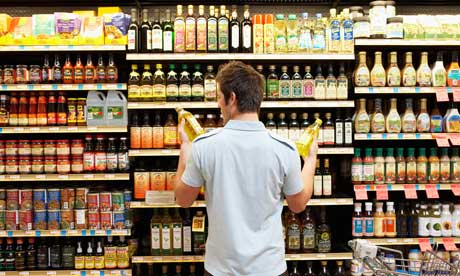
One of the major advantages of organized retail, apart from low prices, is the vast array of choices it provides to the consumers. In the last few years, the rapid increase in the number of super-markets and mega-markets in the country has been accompanied by an explosion in the varieties of every imaginable merchandise that populates their shelves.


But like many other transformations that retail sector has been undergoing, a rather unexpected one has been gaining grounds, and it is not so recent. Retail giants like Walmart are already cutting down the huge number of choices offered in their stores, favouring only selected varieties which are generally preferred by the customers. But how does this make any sense? As it turns out, organized retail players all over the world are facing heat due to at least one of the following factors:
1.    Rising real estate prices,
2.    Expenses of managing a large number of SKUs, their supply chains and inventories,
3. Loss of opportunity of tapping consumers in urban centers where space is a scarcity and huge shopping centers cannot be established and
4. Loss of opportunity to tap communities of consumers in rural areas, which are too small to sustain a super or mega market.
These are also the significantly responsible reasons for the losses being incurred by almost all the organized retail players in India. Stocking a large number of products and their varieties calls for huge real estate investments, and that has been made very difficult by the sky-rocketing real estate prices. Towns and villages are usually dominated by unorganized retailers as they have been so far neglected by the organized players.

Another important aspect is related to the consumers. It has been found that though providing some variety boosts customer satisfaction, going too far might lead to “customer confusion”. Too many choices overwhelm the customers and lower their buying intent. The solution lies in bringing to them a few, “well-researched” types of products instead of too many varieties. This is the simple concept of “Less is More”. So, in a nutshell, this enables the organized retailers to achieve the following:
1.       Better customer satisfaction,
2.      Lesser number of SKUs to manage and hence simpler inventory,
3.      Ability to establish small-sized stores with low real estate investments and
4.      Ability to establish small-sized stores in urban centers as well as in rural areas.
It follows that Walmart’s decision of opening dozens of scaled-down stores in the near future is not surprising at all. It is interesting that some Indian retail giants have already been following this model. One close example could be the Mumbai based D-Mart. Future Group also runs a chain of small stores called KB's Fair Price, apart from the giant Big Bazaar stores.

“Less is More” has far wider implications than what appears from this article so far. For example, in a recent interview with The Economic Times, the MD and CEO of Bajaj Auto Mr. Rajiv Bajaj stressed upon the relevance of this idea to the competitive motorcycle market. Apparently, this has allowed Bajaj to gain a strong position in the market in the last few years. Though the top position is still held by Hero Motocorp, Bajaj Auto has stunned everyone by becoming the most profitable motorcycle manufacturer. The company claimed 58% of the total profits generated by the industry in 2010-11.
As the companies go “on diet” to become more efficient and move faster than the competition, the focus will now shift on selecting the “right diet” or the best choices to be provided to the customers.

March 25, 2012

IIM Raipur Launches Special Issue of Strive on Retail

On 11th March 2012, the Operations and Supply Chain Club of IIM Raipur, OPEP, launched the second issue of its magazine Strive. This issue of Strive focuses on the Retail Sector, an area which has been in the headlines for quite some time and needs immediate attention. The Magazine was launched by Prof. B S Sahay, the Director of IIM Raipur, along with Mr. Satyan Mishra, Co-Founder & MD, Drishtee Foundation and Mr. Bahadur Ali, MD, IB Group. Prof. Sahay lauded the efforts of the club in bringing together the various aspects of and challenges in the retail sector in a special issue of the magazine.

From Left : Akshay Aggarwal, Rohit Bhagat (Editor, Strive) , Mr. Bahadur Ali (MD, IBGroup), Mr. Satyan Mishra (MD, Drishtee Foundation) , Prof. B.S. Sahay (Director, IIM Raipur) , Anshu Katiyar and Nitin Kuraien at the Launch.

Just as the inaugural issue, this issue of Strive has also been launched in a Tablet Friendly version which helps it to be viewed easily on smartphones and tablets. The magazine was launched on the second day of Enspirit 2012, the inaugural edition of the Entrepreneurship Summit of IIM Raipur. Other eminent personalities who graced the occasion were Mr. Abhishek Sinha, CEO, EKO India Financial Services, Mr. Nirmal Kumar, Founder, Nirmal Group, Mr. Snehanand Sinha, Advisor to Social Businesses, Mr. Phanindra Sama, CEO, Redbus, Mr. Rustam Sengupta, CEO, BOOND and Mrs. Rashmi Bansal, the well-known Author & Entrepreneur.
Speaking on this occasion the Editor of Magazine and a Second year student, Rohit Bhagat, highlighted the salient features of the magazine. The second issue of Strive contains articles from both academia and the industry with Companies like Jubilant Foodworks (formerly Domino’s
Pizza India Ltd.) and Technopak contributing articles for the magazine. The magazine features an exclusive interview of Mr Arvind Singhal, CMD, Technopak. Other noted contributors include Mr Ajay Kaul, CEO, Jubilant Foodworks, Prof. Bhalender Singh, Prof. Omkar Prasad Vaidya and Prof. Naval Bajpai.

Students have written articles on the role played by Farmers and Middle-Men in the Supply Chain, emergence of E-Tailing in India, Retail in China, Book Review of “It Happened in India” and Success stories of Amul and Walmart. The local challenge discussed in this issue is the upcoming Logistics Hub in Raipur. In addition to the earlier column on Summer Internship Experience, two more columns have been added. Through the column of Gurumantra, some relevant technical terms would be explained. In this issue, the RFID technology has been explained in details. The other column is a debate, where students have presented contrasting views on “Should India allow FDI in Retail?”

Rohit thanked his team for the successful release of the special issue of Strive. The magazine will now be available for students of all B-schools across India and abroad and also for Retail Professionals in the industry. To access the magazine, please click here.

March 09, 2012

Equinox ’12 Graced by Xploryze


Xploryze, the case study competition organized by Abhijeet Srivastava and Vishal Singh, members of the OPEP club and PGP 2011-13 students, proved to be a huge success.

The case presented to the candidates, written by Abhijeet, raises questions regarding the ethical dilemmas in medical profession – whether doctors should work for charity or for profits. It also asks the candidates to prepare a strategy for building and successfully running a hospital, while providing some details about the founders. The case is given below. 
In the first round of the competition, students from all over the country were invited to form teams of two and submit a short presentation on their proposed solution for the case. The event was a phenomenal success as entries were received from IIM Bangalore, IIM Rohtak, IIM Indore, IIM Raipur, NITIE Mumbai and SP Jain to name a few. The best four entries were selected and the teams were invited to IIM Raipur campus to present their case analysis and solutions in the presence of a judging panel and the students participating in Equinox ‘12. The members of the panel were Dr. Manish Mattoo, an ISB Hyderabad alumnus and Director of Fortis Escorts Hospital and Prof. O. S. Vaidya, Faculty of Operations & Supply Chain Management, IIM Raipur.

The presentations by the finalists reflected very meticulous research and in-depth analysis of an otherwise alien field (medical) with respect to management students. Each presentation was followed by a rigorous Q&A session where, along with the judges, other participants and students too got involved in the discussions. The first position was bagged by Team Chanakyas from NITIE Mumbai.

The judges lauded the OPEP club and the organizers for the successful completion of the event, which attracted such wide participation.
The winning presentation by NITIE Mumbai is given below.